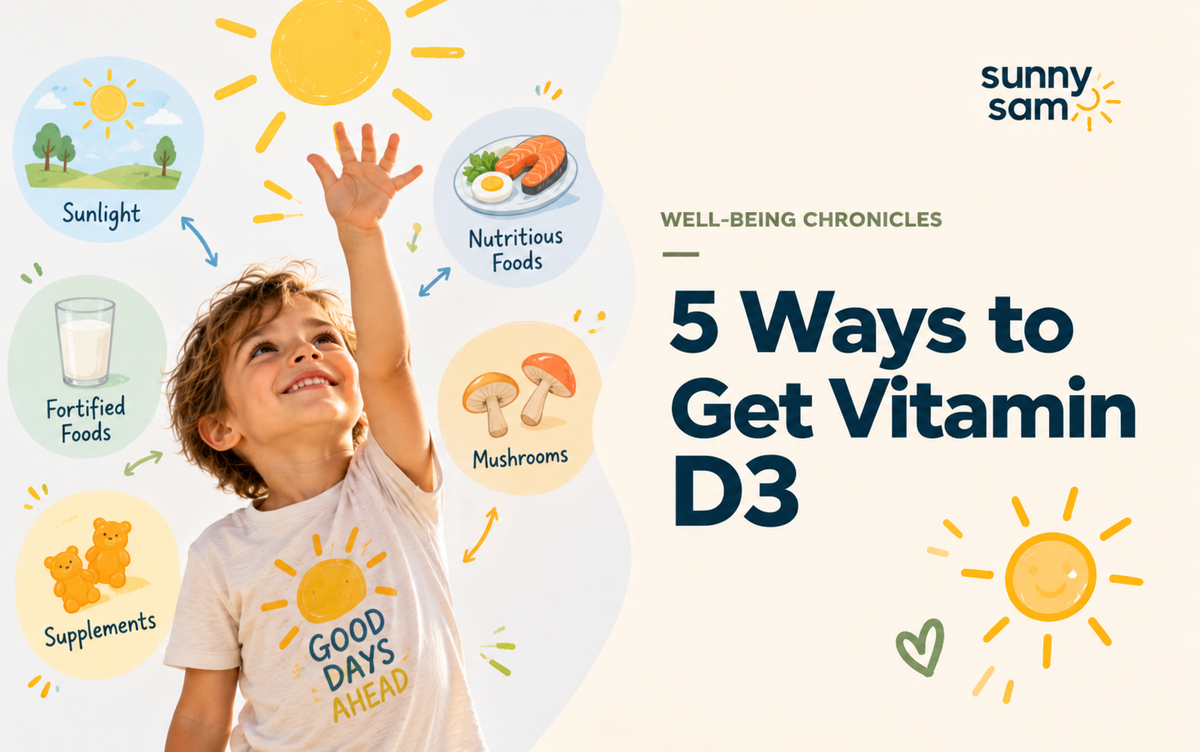
Vitamin D3 is very important for our health, therefore, it is necessary to provide the body with the recommended minimum daily amount. Here are some easy-to-follow tips:
1. Go outside!
The best source of vitamin D is the sun. In the summer, about 15 to 30 minutes of exposure (without protection) is enough to get the recommended daily dose. It is best to go out for sunbathing before 10 am and after 3 pm. Being in the midday sun without protection for more than 30 minutes is harmful to your health. In autumn and winter, sunlight weakens and we cannot produce enough vitamin D. Therefore, we need to turn to other additional sources. One trick that will help you determine how much vitamin D you are producing is to observe your shadow: if our shadow is longer than us, it means that we are not producing enough vitamin D. If the shadow is shorter or longer than the height - congratulations, everything is in order!
2. Give preference to foods that contain vitamin D.
A certain dose of vitamin D can also be obtained from food. Products containing vitamin D are:
- Eggs - specifically egg yolks. Along with vitamin D, eggs are also a good source of protein and fat.
- Oily fish, including salmon, mackerel and sardines, which are rich in omega-3 fatty acids.
- Foods enriched with vitamin D. Cereals, plant-based milk and dairy products are often supplemented with many vitamins and minerals. Be sure to check the label to see if a particular product contains vitamin D.
3. Put mushrooms in the sun
Like humans, mushrooms produce vitamin D when exposed to sunlight or UV light. Accordingly, the vitamin D content in mushrooms is determined by the hours they spend in the sun. Tip: Place mushrooms in the sun 2 hours before eating to increase their vitamin D content.
4. Get healthy fats
Vitamin D is a ‘fat-soluble’ vitamin, meaning it must first dissolve in a certain amount of fat in order to be absorbed. Therefore, it is essential to include healthy fats in our diet, such as olive oil, flaxseed, cheese, milk, oily fish or eggs - the latter two already contain vitamin D, so they are doubly beneficial.
5. Food supplements
There are times when the above sources are still not enough. In such cases, taking a vitamin D supplement can help us meet our daily minimum.
Our vitamin D3 gummies offer a simple, tasty, and convenient way to help maintain healthy levels, supporting strong bones, immune function, and overall wellbeing for both children and adults throughout the year.