
Kids are exposed to germs all the time—at school, on playgrounds, and even at home. That’s normal and actually part of how their immune system learns and grows. What really helps is giving their body steady, everyday support through simple foods.
Here are 10 everyday foods that can naturally support kids’ immunity
1. Oranges and citrus fruits 🍊
Oranges, mandarins, and lemons are rich in vitamin C, which helps support white blood cells—the body’s defense system. They’re also easy, juicy snacks kids usually enjoy.
2. Yogurt 🥣
Yogurt contains probiotics, the “good bacteria” that support gut health. Since a big part of immunity starts in the gut, yogurt plays a helpful role in daily defense.
3. Eggs 🥚
Eggs provide protein, vitamin D, and important nutrients that help build and maintain immune cells. They’re one of the simplest complete foods for kids.
4. Carrots 🥕
Carrots are rich in beta-carotene, which the body turns into vitamin A. This supports healthy skin and the respiratory system—both key barriers against infection.
5. Spinach and leafy greens 🥬
Spinach, kale, and similar greens contain vitamins A, C, iron, and antioxidants that help strengthen overall immunity and energy levels.
6. Berries 🍓
Blueberries, strawberries, and raspberries are packed with antioxidants and vitamin C, helping protect cells from damage while supporting immune response.
7. Garlic 🧄
Garlic contains natural compounds that support the immune system. When cooked into meals, it adds mild flavor along with health benefits.
8. Sweet potatoes 🍠
Sweet potatoes are rich in beta-carotene and fiber. They help support gut health and provide steady energy for growing kids.
9. Nuts and seeds 🌰
Almonds, walnuts, and sunflower seeds provide vitamin E, healthy fats, and minerals that help immune cells function properly.
10. Chicken soup 🍲
Chicken soup provides hydration, protein, and nutrients from vegetables. It won’t “cure” illness, but it supports recovery and comfort when kids are sick.
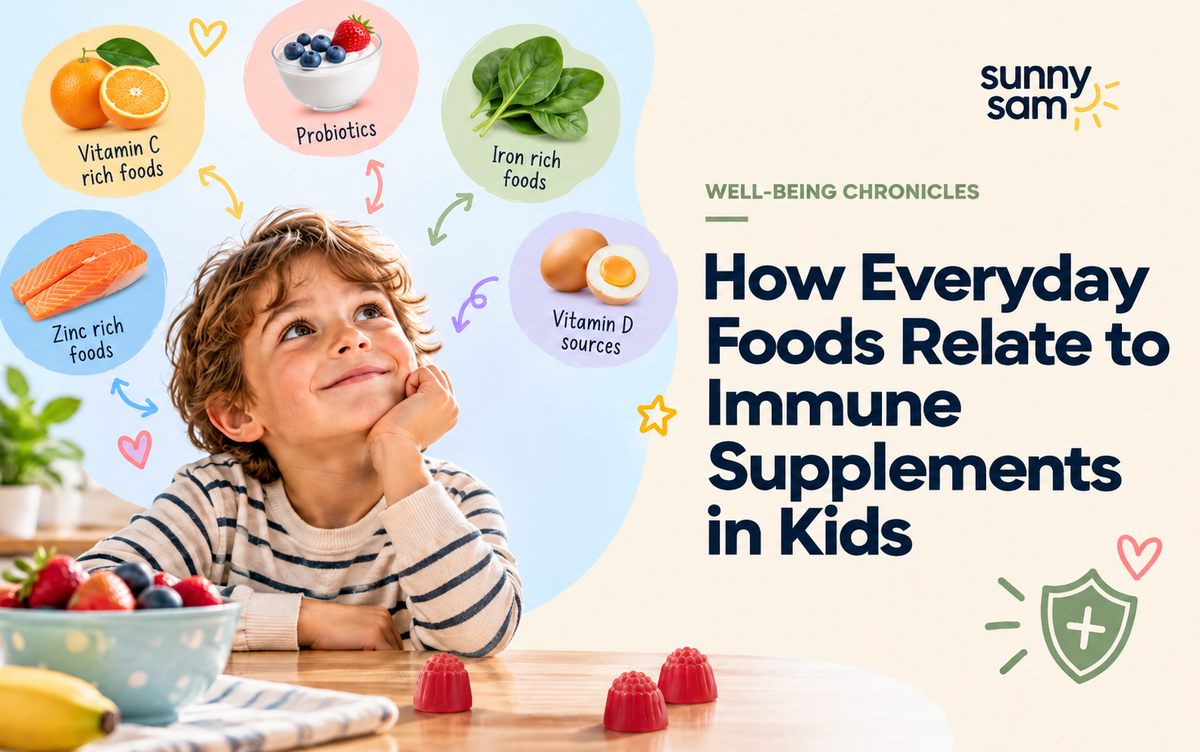
How Everyday Foods Relate to Immune Supplements in Kids 🧃
When parents think about boosting immunity, two ideas usually come up: healthy foods and vitamin supplements. They’re often treated as separate things, but in reality they’re closely connected. Supplements don’t replace food—they usually fill the gaps when food intake isn’t consistent enough.
Understanding the relationship between the two helps you make smarter, calmer choices for your child’s health.
1. Supplements are “support,” not the foundation
Think of food as the main building material for the immune system. Supplements are more like backup supplies.
For example:
- A child eating fruits, vegetables, proteins, and dairy regularly may not need extra vitamins
- A child who is picky, eats irregularly, or has dietary restrictions might benefit from targeted supplements
So the correlation is simple: better diet = lower need for supplements.
2. Vitamin C: food vs supplement
From foods like oranges, strawberries, and berries, vitamin C is absorbed naturally alongside fiber and antioxidants.
Supplements provide:
- A concentrated dose of vitamin C
- Useful during low fruit/vegetable intake or seasonal illness periods
But food has an advantage: it delivers vitamin C in a balanced nutrient “package,” not in isolation.
3. Vitamin D: where supplements often matter more
Unlike vitamin C, vitamin D is harder to get from food alone. Eggs and fortified dairy help, but many kids still don’t reach optimal levels—especially with limited sunlight exposure.
That’s why vitamin D supplements are often recommended more commonly than other vitamins.
Correlation insight:
- Foods provide baseline support
- Supplements often correct environmental or lifestyle gaps
4. Probiotics: yogurt vs capsules
Yogurt naturally contains beneficial bacteria that support gut health. Since gut health is closely linked to immunity, this is already a strong food-based source.
Probiotic supplements may help when:
- A child has taken antibiotics
- Digestive balance is disrupted
- Diet lacks fermented foods
But regular yogurt can often provide steady daily support without needing capsules.
5. Zinc: food-first, supplement-second
Foods like meat, eggs, and nuts provide zinc, which is important for immune cell development.
Zinc supplements may be used when:
- Appetite is low
- Diet lacks protein-rich foods
- A pediatrician identifies deficiency risk
However, too much zinc from supplements can actually interfere with other minerals, so food sources are usually preferred first.
6. Antioxidants: food synergy matters
Foods like carrots, spinach, berries, and sweet potatoes contain a mix of antioxidants—not just one nutrient.
Supplements often isolate single compounds, but food provides:
- Fiber
- Phytochemicals
- Vitamins working together
This “team effect” is something supplements can’t fully replicate.
7. The key relationship: prevention vs correction
A simple way to understand it:
- Whole foods = daily immune maintenance
- Supplements = targeted correction when needed
So instead of thinking “food OR supplements,” it’s more accurate to think “food FIRST, supplements IF needed.”
The strongest immune support for kids usually comes from consistent eating habits, not from adding more products. Supplements can be helpful in specific situations, but they work best when they complement—not replace—a real-food diet.
In other words, the goal isn’t to build an immunity system powered by pills, but one quietly supported by everyday meals, with supplements acting as a backup when life gets in the way.
Healthy meals provide the foundation for a strong immune system, but supplements can help bridge nutritional gaps when needed. Immune-supporting gummy supplements containing nutrients like vitamin D and zinc offer a convenient addition to an already balanced lifestyle.
If you want to find out more about iron or magnesium check out our other blogs:
Frequently Asked Questions About Magnesium
Frequently Asked Questions About Iron
Frequently Asked Questions About Zinc
Check out our Immunity Supplements Boosting here: