
Iron is one of those nutrients most parents don't think about until the pediatrician brings it up at a checkup.
On average, kids in the US get enough. But the NIH Office of Dietary Supplements lists young children and teenage girls among the groups most likely to fall short, and about 8% of toddlers have iron deficiency.
Picky phases don't help. A week of plain pasta, crackers and milk can be surprisingly low in iron - even if it's a completely normal week for a 3-year-old.
Below you'll find how much iron kids need at each age, the best kid-friendly sources, one simple pairing that helps the body absorb more of it, and a 20-minute beef and lentil sloppy joe recipe with about 5 mg of iron in every sandwich.
Why Iron Matters for Growing Kids
Iron's main job is helping red blood cells carry oxygen from the lungs to the rest of the body. It's a key part of hemoglobin, the protein that does the carrying, and of myoglobin, which delivers oxygen to muscles.
Kids also need iron for:
- Physical growth - building new tissue and more blood as they get bigger
- Brain development - iron supports normal neurological development, especially in the early years
- Everyday cell work - including making some hormones
When iron stays low for a while, kids can seem tired, weak or unusually distracted. Those signs are easy to blame on a late bedtime, so if something feels off, ask your pediatrician. A simple blood test can check.
How Much Iron Do Kids Need Per Day?
The Recommended Dietary Allowance (RDA) for iron changes with age - and not always upward:
| Age | Boys | Girls |
|---|---|---|
| 1–3 years | 7 mg | 7 mg |
| 4–8 years | 10 mg | 10 mg |
| 9–13 years | 8 mg | 8 mg |
| 14–18 years | 11 mg | 15 mg |
Two things stand out. Kids aged 4–8 actually need more iron than 9–13-year-olds, because growth in those early years is so fast. And at 14, girls' needs almost double, since iron is lost every month with periods. That's also the age when many teens start skipping breakfast, which is why teen girls are such a common gap.
Vegetarian kids need more, too. The NIH notes the requirement is 1.8 times higher for people who don't eat meat, because iron from plants is harder to absorb.
Best Iron-Rich Foods for Kids
These everyday foods give the most iron per typical serving:
| Food | Serving | Iron |
|---|---|---|
| Breakfast cereal fortified with 100% DV iron | 1 serving | 18 mg |
| White beans, canned | 1 cup | 8 mg |
| Lentils, cooked | ½ cup | 3 mg |
| Spinach, boiled | ½ cup | 3 mg |
| Tofu, firm | ½ cup | 3 mg |
| Kidney beans, canned | ½ cup | 2 mg |
| Chickpeas, cooked | ½ cup | 2 mg |
| Lean beef | 3 oz | 2 mg |
| Baked potato with skin | 1 medium | 2 mg |
| Stewed tomatoes, canned | ½ cup | 2 mg |
| Dark chocolate (45–69% cacao) | 1 oz | 2 mg |
| Green peas | ½ cup | 1 mg |
| Chicken | 3 oz | 1 mg |
| Egg, hard-boiled | 1 large | 1 mg |
| Raisins | ¼ cup | 1 mg |
| Whole wheat bread | 1 slice | 1 mg |
Source: NIH Office of Dietary Supplements, based on USDA FoodData Central.
Fortified cereal and beans lead the list by a mile. Just check the label - many kids' cereals are fortified with much less than 100% of the Daily Value.
Spinach looks great on paper, but it also contains compounds that block some of its iron, so it shouldn't be your only source. And milk and cheese have almost no iron at all. That's why a toddler who fills up on milk can end up with little room for iron-rich foods.
Heme vs. Non-Heme Iron: The Vitamin C Trick
Not all iron is absorbed the same way. Heme iron, found in meat, poultry and seafood, is absorbed easily. Non-heme iron, found in beans, grains, vegetables and fortified foods, is absorbed less well - and whatever else is on the plate affects it more.
According to the NIH, the body absorbs about 14–18% of iron from mixed diets that include meat and vitamin C, compared with 5–12% from vegetarian diets.
A few easy pairings help:
- Add vitamin C to plant iron - strawberries on fortified cereal, tomato sauce with beans, orange slices next to lentil soup.
- Mix a little meat with beans or lentils - meat, poultry and fish also help the body absorb iron from plants.
- Offer milk between meals - calcium may reduce iron absorption, though the research isn't fully settled.
For most kids eating a varied diet, these tweaks make a small difference. For picky eaters and vegetarian families, they're an easy win - and the recipe below builds in the first two.
Recipe: 20-Minute Beef and Lentil Sloppy Joes
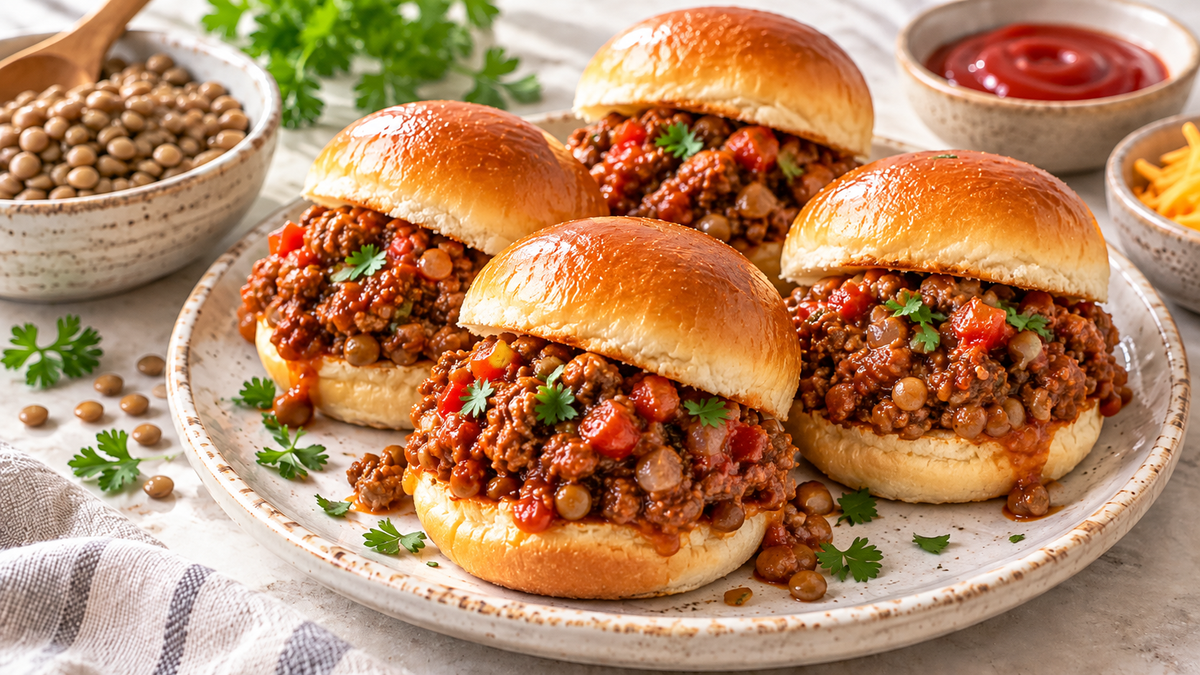
Sloppy joes are messy, a little sweet, and almost every kid will eat one. This version swaps part of the meat for lentils, which melt right into the sauce, and adds a whole red bell pepper for vitamin C. You get both types of iron plus the absorption boost in a single pan.
Prep time: 5 minutes | Cook time: 15 minutes | Makes: 6 sandwiches | Iron: ~5 mg per sandwich (estimated)
Ingredients
- 1 Tbsp olive oil
- 1 small onion, finely diced
- 1 red bell pepper, finely diced
- 1 lb lean ground beef (90% lean)
- 1 clove garlic, minced
- 1 can (15 oz) lentils, drained and rinsed (or 1½ cups cooked lentils)
- 1 can (15 oz) tomato sauce
- 2 Tbsp tomato paste
- 1 Tbsp maple syrup or brown sugar
- 1 Tbsp Worcestershire sauce
- 1 tsp yellow mustard
- ½ tsp smoked paprika (optional)
- Salt and pepper to taste
- 6 whole wheat buns
Instructions
- Heat the oil in a large skillet over medium heat. Add the onion and bell pepper and cook for 3–4 minutes, until soft.
- Add the beef and garlic. Cook, breaking the meat into small crumbles, until no pink remains - about 5 minutes. Drain any extra fat.
- Mash about half of the lentils with a fork, then stir all of them into the pan. The mashed ones thicken the sauce and blend in with the beef, so picky eaters won't spot them.
- Stir in the tomato sauce, tomato paste, maple syrup, Worcestershire, mustard and paprika. Simmer for 5–7 minutes, stirring now and then, until thick.
- Taste, season with salt and pepper, and spoon onto toasted buns.
Tips and Swaps
- Veggie-suspicious kids: blend the onion and bell pepper into the tomato sauce before adding it. Same nutrients, nothing to pick out.
- Toddlers: serve it open-faced on half a bun or spooned over rice, cut into small pieces.
- Vegetarian: skip the beef, use 2 cans of lentils and a vegetarian Worcestershire (the regular kind contains anchovies). Keep the bell pepper - plant iron needs that vitamin C.
- Bread-free: spoon it over a baked potato, which adds about 2 mg more iron.
- Make ahead: the filling keeps in the fridge for up to 4 days and freezes for up to 3 months. Freeze it in portions for busy weeknights.
The iron estimate is based on NIH and USDA values for each ingredient and will vary by brand. One sandwich covers about half the daily iron need of a child aged 4–8, and more than half for ages 9–13.
5 More Easy Iron-Rich Meals Kids Actually Eat
- Fortified cereal with strawberries - a fully fortified cereal can cover a whole day's iron in one bowl, and the berries add vitamin C.
- White bean tomato pasta - stir a can of white beans into marinara over whole wheat spaghetti. One cup of beans adds about 8 mg.
- Hummus and pepper wraps - chickpeas bring the iron, red pepper strips bring the vitamin C, and kids love dipping.
- Egg and spinach scramble - chop the spinach very finely and serve with orange slices on the side.
- Baked potato chili bar - top a baked potato with bean chili. Together they add up to roughly 4 mg.
Frequently Asked Questions
Which foods are highest in iron for kids?
Iron-fortified breakfast cereal, white beans, lentils, tofu, chickpeas, kidney beans and lean beef are some of the richest everyday sources. For picky eaters, hiding beans or lentils in sauces, soups and sloppy joes is often the easiest way in.
How much iron does a 5-year-old need?
Children aged 4–8 need 10 mg of iron per day. One of the sloppy joes above plus a bowl of iron-fortified cereal at breakfast would cover it.
What are good iron sources for vegetarian kids?
Beans, lentils, tofu, chickpeas, fortified cereal, whole grains and dark leafy greens. Because plant iron is harder to absorb, pair them with vitamin C foods like tomatoes, peppers, berries or citrus at the same meal.
Does milk block iron absorption?
Calcium may reduce iron absorption a little, though the evidence isn't conclusive. The bigger issue for toddlers is that lots of milk fills them up, leaving less room for iron-rich foods. Ask your pediatrician how much milk is right for your child's age.
What are the signs of low iron in kids?
Tiredness, weakness, pale skin and trouble concentrating are common ones, but they overlap with many other things. Only a blood test can confirm it. We cover the full list in 10 Signs of Iron Deficiency in Kids.
Can kids get too much iron?
From food alone, it's very unlikely in healthy kids. The real risk is supplements: the upper limit for children aged 1–13 is 40 mg per day from all sources, and accidental overdose of iron-containing products is a leading cause of fatal poisoning in children under 6. Always store supplements closed and out of reach.
When Food Alone Is Not Enough
Picky eating, a vegetarian diet or a teen's busy schedule can make it hard to hit iron targets with food every single day.
A food-first approach is always the place to start. If your pediatrician thinks your child could use extra support, a supplement can help fill the gap - just never start one without checking first, since kids only need small amounts.
If your family needs that extra help, SUNNY SAM Iron Gummies come with vitamin C built in, the same pairing that helps the body absorb iron from food. Because gummies look like candy, keep the bottle closed and up high, and never call them a treat.
Want to learn more first? Read Chewable Iron Gummies: A Simple Way to Support Daily Iron Needs.
Check out our Iron Supplements here 👇
Iron Gummies with Vitamin C for Kids
Iron Gummies with Vitamin C for Adults