
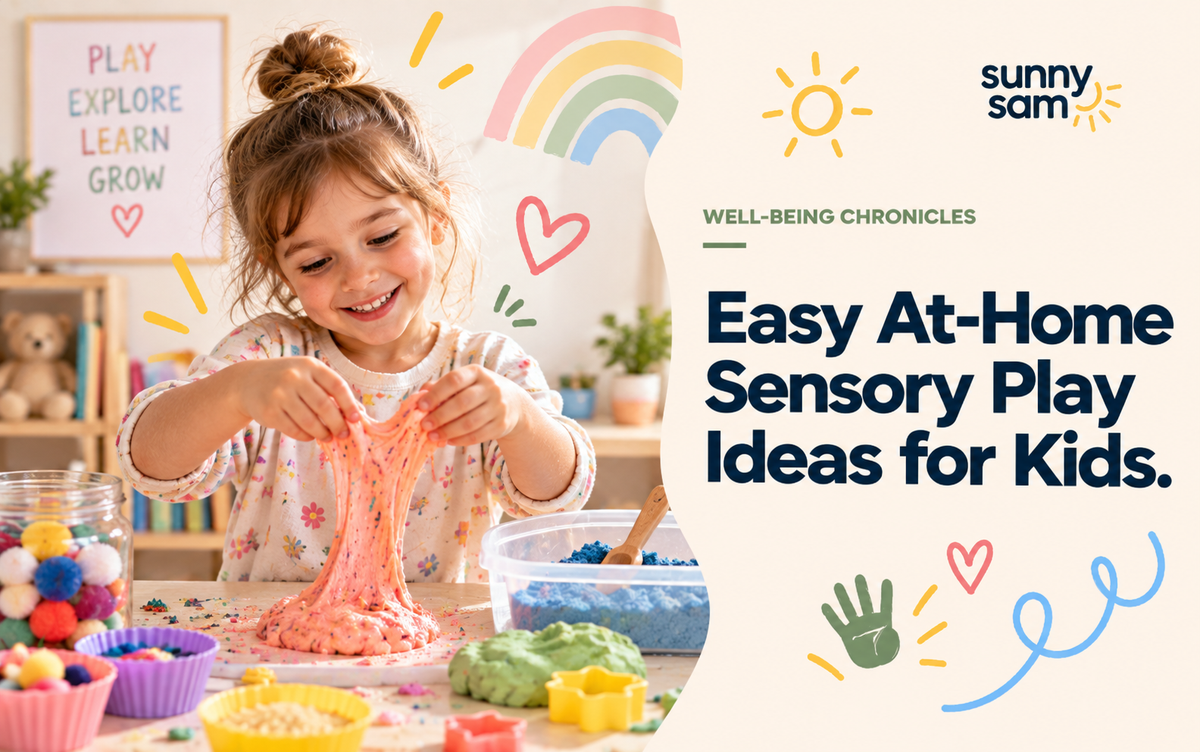
Sensory play doesn’t need fancy toys, expensive kits, or Pinterest-level setups. In fact, some of the best at-home sensory experiences come from everyday objects already sitting in your kitchen, bathroom, or backyard. For kids, sensory play isn’t just “fun time”—it’s how they explore the world, build language, develop motor skills, and learn emotional regulation.
The good news? You can set up meaningful sensory play in minutes, without stress or overwhelming cleanup.
Here are easy, creative, and genuinely enjoyable at-home sensory play ideas that feel natural, not forced.
1. The Classic “Kitchen Treasure Bin”
Fill a bowl or container with dry kitchen staples:
- Rice, pasta, lentils, oats
- Scoops, cups, spoons
- Small hidden toys or objects
Kids love digging, pouring, and discovering “hidden treasure.” The repetitive motion is also calming and helps build focus.
2. Water Play That Feels Like Magic
A sink, bathtub, or large bowl is enough.
Try:
- Sponges for squeezing
- Cups and funnels
- Food coloring for “potion water”
- Floating toys
Give it a theme like “ocean rescue” or “mini science lab” to spark imagination.
3. Cloud Dough (Soft Sensory Play)
Mix:
- Flour + oil
It becomes soft, moldable dough that feels like sand but behaves like clay. Kids can shape, press, and sculpt freely.
4. Nature Tray Indoors
Collect outside:
- Leaves
- Stones
- Flowers
- Twigs
Bring them inside and let kids sort, compare textures, or build small “nature worlds.” It’s simple but deeply engaging.
5. Scent Exploration Game
Use everyday smells:
- Cinnamon
- Lemon peel
- Vanilla
- Coffee
Kids close their eyes and guess each scent. This builds memory, attention, and vocabulary in a playful way.
6. DIY Sensory Bottles
Fill bottles with:
- Water + glitter
- Oil + food coloring
- Beads or small objects
Watching them move slowly is calming and visually fascinating.
7. Sound Safari at Home
Walk through the house and listen:
- Fridge humming
- Clock ticking
- Rain outside
- Footsteps
Or take turns making sounds and guessing them. It sharpens listening skills and awareness.
8. Edible Sensory Play
For younger kids:
- Yogurt painting
- Mashed fruit play
- Cooked spaghetti
- Soft fruits to sort and taste
Safe, messy, and developmentally appropriate.
9. Foam or Cream Play
Shaving foam or whipped soap (for older kids) creates a fluffy, sensory-rich surface for:
- Drawing
- Sculpting
- Pretend cleaning
10. Texture Wall
Tape different materials to a wall:
- Bubble wrap
- Fabric
- Sandpaper
- Foil
Kids explore textures and describe how they feel—smooth, rough, soft, or bumpy
Why Sensory Play Matters
Sensory play supports:
- Fine motor skills (grasping, pouring, squeezing)
- Language development (describing textures and experiences)
- Focus and attention
- Emotional regulation and calming the nervous system
- Creativity and problem-solving
It’s not just play—it’s how children learn to understand their world.
A Simple Note on Magnesium (and Why It Matters)
Alongside sensory play, nutrition also plays a quiet but important role in how children feel and function—and magnesium is one of those key nutrients.
Magnesium is a mineral that helps the body and brain work properly. It supports:
- Healthy nerve function
- Muscle relaxation and movement
- Energy production
- Sleep quality
- Calm mood regulation
In simple terms, magnesium helps the nervous system “settle.” This is why it’s sometimes linked with better relaxation and emotional balance in both children and adults.
While sensory play helps kids process energy through movement and touch, magnesium supports the body from the inside—helping muscles relax after activity and supporting a calmer overall state.
Good natural sources of magnesium include:
- Bananas
- Nuts and seeds (like almonds and pumpkin seeds)
- Beans and lentils
- Whole grains
- Leafy greens like spinach
Of course, nutrition is just one part of a child’s wellbeing. Balanced meals, sleep, movement, and play all work together.
You don’t need perfect setups or expensive materials to create meaningful sensory play. A bowl of rice, a tray of water, or a walk outside can become a rich learning experience when children are free to explore.
And just like sensory play helps children process the world externally, nutrients like magnesium quietly support their internal balance—helping the body feel more steady, rested, and ready to engage again.
The real magic is simple: curiosity, repetition, and space to explore.
Sensory play supports creativity, confidence, and important developmental skills. Pairing enriching activities with balanced nutrition gives children the best foundation for growth, while gummy supplements can help fill nutritional gaps and support healthy development as they learn through play.
Shop Here 👇