
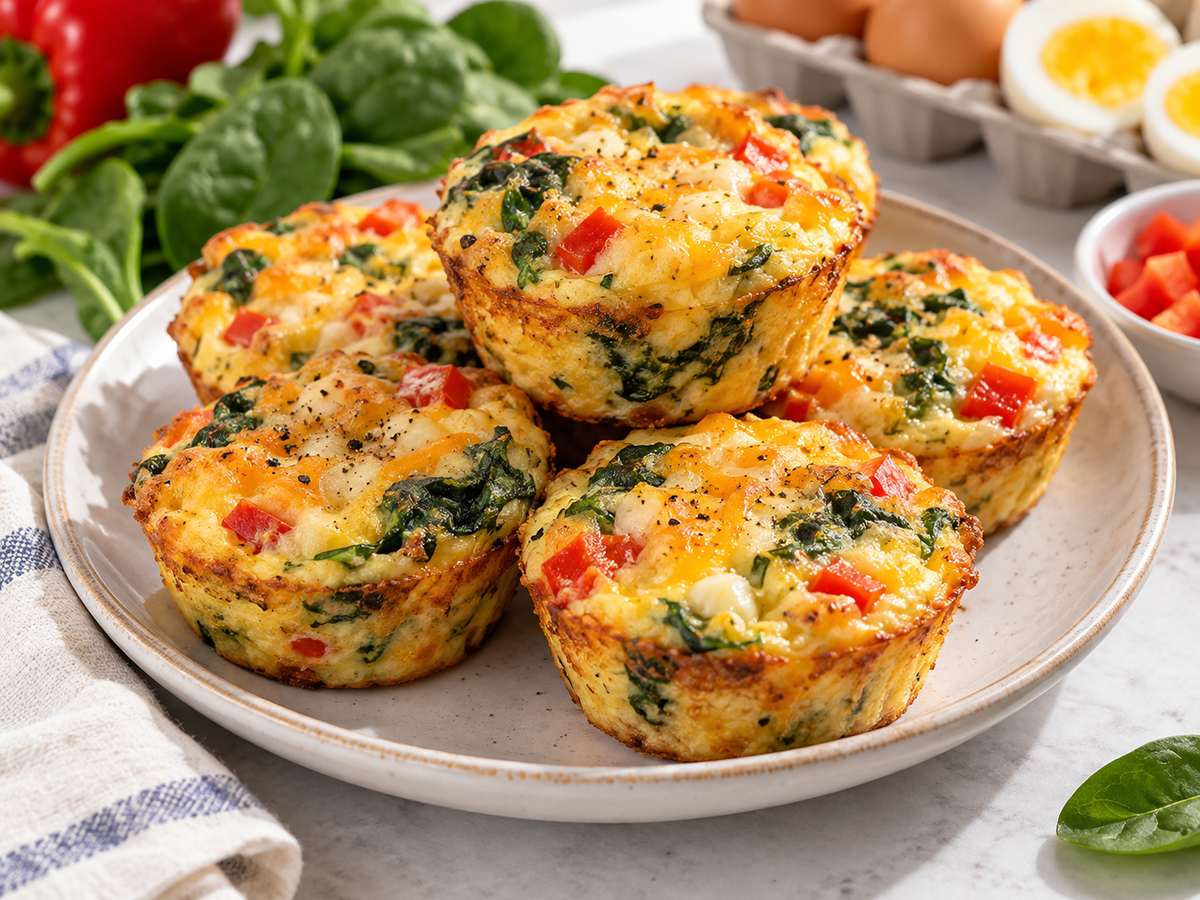

This is the recipe that fixed breakfast in my house, and it is barely a recipe at all. You whisk eggs, pour them into a muffin tin, bake for twenty minutes, and you have twelve portable breakfasts that keep four days in the fridge and two months in the freezer.
Two of them is about 14 grams of protein, reheated in thirty seconds, eaten in the car if it comes to that.
The reason egg muffin cups work is not that they are clever. It is that they move the effort to a time when you have some. Sunday evening you have twenty minutes. Tuesday at 7:15am you have none, and that is precisely when a child needs a breakfast that will hold them through to lunch.
Below is the method, the three mistakes that produce sad rubbery egg pucks, the flavour combinations children actually eat, and exactly how to freeze and reheat them.
Why Egg Muffin Cups Work for Busy Mornings
Most children's breakfasts are carbohydrate with a little sugar on top. Cereal, toast, a cereal bar, juice. That gives a child about an hour of energy before blood sugar drops, and the drop lands mid-morning — right in the middle of the school day they are supposed to be concentrating through.
Protein changes that curve. It digests slower, it keeps blood sugar steadier, and it holds a child full for longer. The problem has never been that parents don't know this. The problem is that protein usually means cooking, and cooking is the thing there is no time for.
Egg muffin cups solve the timing rather than the nutrition. The nutrition was never complicated — eggs are one of the cheapest complete proteins there is. What is complicated is standing at a hob scrambling eggs for three children at different stages of readiness.
A few things make this particular format work:
- They are portable. Eaten standing up, in the car, or on the walk to school.
- They reheat in 30 seconds, which is faster than toast.
- They freeze properly, so one session covers several weeks.
- They are endlessly variable, so you can make two flavours in one tin and stop arguing about it.
- Children can serve themselves, which removes you from the process entirely.
How Much Protein Is in Egg Muffin Cups
One muffin made with the recipe below carries roughly 6 to 7 grams of protein — about 6 g from the egg and 1 to 2 g from the cheese. Two muffins lands at 13 to 15 grams.
For context, here is what children need across a whole day:
| Age | Protein per day |
|---|---|
| 1–3 years | 13 g |
| 4–8 years | 19 g |
| 9–13 years | 34 g |
| Girls 14–18 | 46 g |
| Boys 14–18 | 52 g |
Most children get enough protein overall. What they usually lack is protein at breakfast — it tends to arrive in one block at dinner instead. A reasonable breakfast target for a school-age child is 10 to 15 grams, which two egg muffin cups clears comfortably.
A younger child will manage one, which is still a better start than a bowl of cereal.
What You Need
Nothing specialised, but two things genuinely matter.
Ingredients — makes 12
- 12 large eggs
- 1 cup grated cheddar (about 4 oz)
- 1 cup finely chopped vegetables — spinach, peppers, mushrooms, broccoli
- ½ tsp salt
- ¼ tsp black pepper
- Optional: ½ cup cooked, chopped ham, bacon or sausage
Equipment
- A non-stick 12-cup muffin tin. This is the one that matters — egg welds itself to an ordinary tin.
- Silicone liners if your tin is not reliably non-stick. Skip paper liners: they warp and the muffins stick to them.
Two ingredient notes worth knowing before you start.
Skip the milk. Many egg muffin recipes add milk or cream. Extra liquid makes them deflate and go watery, and the egg is already doing the job.
Leave out tomatoes. They release a surprising amount of water during baking and turn the bottom of each muffin soggy. Peppers give you the same colour without the problem.
How to Make Egg Muffin Cups
Twenty minutes, most of it the oven's work.
- Heat the oven to 350°F / 180°C and grease the muffin tin properly — every cup, up the sides.
- Pre-cook any meat and any firm vegetables. Raw sausage will not cook through inside an egg muffin, and firm vegetables like broccoli stay crunchy. Spinach can go in raw; it wilts.
- Chop everything finely. Large pieces sink to the bottom and make the muffins break apart when you lift them out.
- Whisk the eggs with salt and pepper until just combined. Stop as soon as the yolks and whites are mixed — over-whisking beats in air that collapses later.
- Stir in the vegetables and meat, keeping the cheese back.
- Fill each cup about three-quarters full, then sprinkle the cheese on top rather than mixing it through. Cheese on top browns and seals the surface.
- Bake 18 to 20 minutes, until the centres are just set with the faintest wobble. A toothpick should come out clean.
- Cool in the tin for 5 minutes, then run a knife round each one and lift it out.
They will puff up in the oven and sink a little as they cool. That is normal and happens to everyone — it is not a sign you did something wrong.
The Three Mistakes That Ruin Egg Muffins
Almost every bad batch comes down to one of these.
1. Overbaking. This is the big one. Egg goes from set to rubbery in about three minutes, and once it is there you cannot bring it back. Pull them when the centres still have a slight jiggle — they carry on cooking in the hot tin. Overbaked muffins also collapse completely rather than settling gently.
2. Baking too hot. 350°F works, but if your oven runs hot the outsides set before the middles and the texture turns spongy. If your batches keep coming out tough, drop to 325°F and add a few minutes. For a noticeably fluffier result, put a dish of water on the bottom rack while the oven heats — the steam makes a real difference.
3. Adding liquid or wet vegetables. Milk, cream, raw tomatoes and uncooked mushrooms all release water. The result is a muffin that deflates into a flat disc with a damp bottom. Keep the mix dry, pre-cook anything watery, and fill the cups fully so they have height to start with.
One more, minor but annoying: using paper liners. They stick, they warp, and half the muffin stays behind. Grease the tin or use silicone.
Flavour Combinations Kids Actually Eat
The base recipe is a blank canvas. These are the combinations that get eaten rather than negotiated over:
- Ham and cheddar — the safest option, and the one picky eaters accept first
- Bacon and chive — strong enough to carry a child who claims not to like eggs
- Cheese and finely chopped broccoli — the vegetable disappears into the cheese
- Spinach and feta — better for older children; buy pre-crumbled feta, since block feta releases water
- Sausage and pepper — the most filling version
- Pizza — mozzarella, a little tomato paste (not fresh tomato) and chopped pepperoni; reliably the favourite
- Plain cheese — no shame in it, and still 7 grams of protein
A practical trick: make two flavours in one tin. Fill the cups with plain egg, then add different mix-ins to each half. One batch, two children, no argument.
How to Store and Freeze Egg Muffin Cups
This is where the recipe earns its place.
In the fridge: cool completely first, then store in an airtight container for up to 4 days. Putting them away warm creates condensation and a soggy base.
In the freezer: wrap each muffin individually in plastic wrap or foil, then put them all in a freezer bag. They keep 2 to 3 months. The individual wrapping matters — loose muffins stick together and you end up defrosting six when you wanted two.
Label the bag with the date and the flavour. In two months you will not remember which batch had the broccoli in it.
How to Reheat Them in the Morning
From the fridge: 20 to 30 seconds in the microwave. That is it.
From frozen, the good way: move what you need to the fridge the night before, then reheat as above. Thirty seconds, perfect texture.
From frozen, the forgot-to-plan way: unwrap, wrap in a damp paper towel, microwave 2 to 3 minutes, checking partway. The damp towel keeps them from drying out. Check they are hot all the way through — half-frozen in the middle is a common complaint, and most recipes online under-state this time.
In an oven or air fryer: about 10 minutes at 350°F from frozen. Better texture, but nobody is doing this on a school morning.
One reheating rule: do not microwave them twice. Egg turns rubbery the second time round.
Allergy and Diet Swaps
| Instead of | Use |
|---|---|
| Cheddar | Any hard cheese, or leave it out and add ½ tsp more salt |
| Dairy cheese | Nutritional yeast, or a firm dairy-free cheese that melts |
| Ham or bacon | Cooked lentils, black beans or extra vegetables |
| Whole eggs | Egg whites only — about 16 whites for 12 cups, with a little oil for texture |
Egg allergy is the one this recipe cannot work around — the egg is the whole structure. For a child with an egg allergy, chickpea flour batter baked the same way is the nearest equivalent, but it is a different recipe rather than a swap.
Frequently Asked Questions
Why did my egg muffins deflate?
Some deflating is completely normal — they rise in the oven and settle as they cool. Total collapse into a flat disc usually means one of three things: overbaking, over-whisking the eggs, or liquid in the mix from milk or watery vegetables. Filling the cups to three-quarters rather than half gives them more height to begin with.
Can I make egg muffin cups without a muffin tin?
Not really, in the sense that the tin is what makes them portable portions. You can bake the same mixture in a greased baking dish as a crustless quiche and cut it into squares, which stores and freezes just as well — it is simply less convenient to grab.
How do I stop egg muffins sticking?
Grease a non-stick tin properly, including up the sides, or use silicone liners. Avoid paper liners entirely. And let them cool in the tin for five minutes before you try to lift them — hot egg tears.
Are egg muffin cups healthy for kids?
They are eggs, cheese and vegetables, so yes for most children. Eggs are a complete protein and carry vitamin D, B12, choline and selenium. The things to watch are salt, especially if you add ham or bacon, which are already salty, and allergies.
How many should a child eat?
One for a toddler or preschooler, two for a school-age child — about 14 grams of protein, which is a solid breakfast. Older children and teenagers will happily eat three, usually alongside toast or fruit.
Can I make them the night before?
You can bake them the night before and refrigerate. You can also mix the egg and fillings and keep the raw mixture covered in the fridge overnight, then pour and bake in the morning — though at that point baking a full tray on Sunday is the better use of the same effort.
Shop Here 👇
Anastasia Glover writes about family nutrition and children's well-being for Sunny Sam.
This article is for informational purposes only and is not medical advice. Check recipes against your child's allergies, and supervise young children with foods that may pose a choking risk.